
Java Full Stack Developer Course
Learn to build a successful career in software development with the Java Full Stack Developer Course at Ariyalam. This course helps you gain skills in both front-end and back-end technologies. Whether you are a beginner, a working professional, from a non-IT background, or looking for a career switch, this program provides hands-on experience through real-time, industry-focused projects.
Nowadays, web developer courses are available in both classroom and online formats. Before choosing a course, it is important to understand the type of training provided. Check whether the trainers are currently working professionals or freelancers, as real-time experience adds more value to your learning.
Also, choose the mode of learning—java full stack developer online training or classroom-based—based on your comfort. A minimum batch size of 5 to 8 students is ideal, as it allows better interaction and understanding during sessions. Before enrolling, make sure to thoroughly research and review all key aspects of the course to make the right decision.
Java Full Stack Developer Course Fees
₹40,000 ₹35,000
Key Features
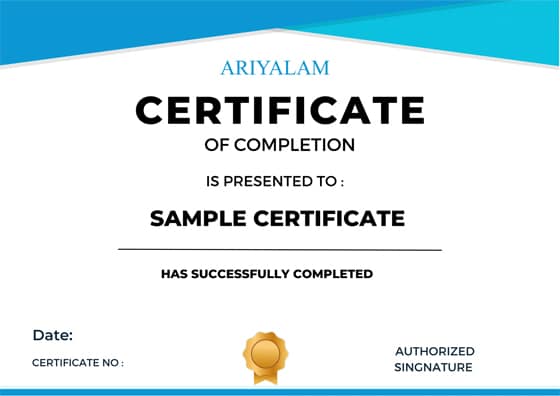
Java Full Stack Developer Certification
Key Features
Java Full Stack Developer Certification
Java Full Stack Developer Course Online
Our java full stack developer online course at Ariyalam allows you to learn from anywhere with flexible schedules. You will get access to live interactive sessions, and if you have any doubts, recorded sessions will be provided for revision. In addition, dedicated doubt-clearing sessions and continuous mentor support are also available to ensure a smooth learning experience.
Java Full Stack Developer Course with Placement
This course comes with placement support to help you confidently crack interviews. By the end of the course, you will gain the skills and confidence needed to secure a job.
The course includes:
- Resume building
- Mock interviews
- Job assistance
- Career guidance
Ariyalam ensures you are fully prepared for job opportunities.
Java Development Course Trainer Profile
Our training course is led by experienced MNC industry professionals who are currently working in the same field and have strong expertise in both front-end and back-end development.
- 5+ years of experience
- Hands-on experience in real-time web applications using Java, Spring Boot, and React
- Strong knowledge of database management and API development
- Practical experience in building scalable applications
Best java full stack developer course online
If you are searching for the best online Java Full Stack Developer course, this program offers complete training suitable for beginners, experienced professionals, students, and non-IT candidates.
You will learn:
- Front-end: HTML, CSS, JavaScript, React
- Back-end: Java, Spring Boot
- Database: MySQL
Java Full Stack Course Syllabus
HTML5 and CSS3
HTML Basics
- Basic tags: headings, paragraphs, links, lists, and images
- New HTML5 tags
- Forms and validations
- Local storage and IndexDB for storing data in the browser
CSS3 Basics
- CSS syntax and selectors
- Styling elements: colors, borders, margins, padding
- CSS3 properties: gradients, shadows, and rounded corners
- Animations and transitions
- Tooltips, flexbox, and CSS grid for layout
CSS Framework: Bootstrap
- Setting up and using Bootstrap for responsive design
- Layouts with Bootstrap grid
- Using Bootstrap components like navigation bars, buttons, modals
2. JavaScript and jQuery
JavaScript Basics:
Getting Started
- Introduction to JavaScript: variables, data types, operators, and expressions
- Functions, parameters, and return values
- Flow control: if statements, loops, switch cases
JavaScript Essentials
- Objects, arrays, and common methods (sort, filter, map)
- Functions: hoisting, closures, and scope
- Error handling and debugging
Working with the DOMs
- Selecting and modifying HTML elements
- Adding and removing elements dynamically
- Event handling (clicks, mouseover, etc.)
- Introduction to the Browser Object Model (BOM): window, screen, location, history, cookies
JavaScript and JSON
- Data types in JSON
- Parsing and stringifying JSON data
- Using JSON in AJAX and API calls
JavaScript vs. jQuery
- Basics of jQuery: selectors, events, and animations
- DOM manipulation with jQuery
- AJAX calls with jQuery
3. AJAX and Asynchronous Programming
AJAX Fundamentals
- XMLHttpRequest and Fetch API for asynchronous data loading
- Promises and async/await for handling asynchronous tasks
- Working with APIs and fetching data
4. Angular
Modern Front-End Framework
Getting Started with Angular
- Introduction to Angular and key features
- Setting up an Angular project and basic project structure
- Components, modules, and services
Angular Essentials
- Data binding: one-way and two-way
- Pipes for data transformation
- Directives (ngIf, ngFor, ngSwitch) for conditional rendering
Forms in Angular
- Template-driven and reactive forms
- Form validation and error handling
Angular Services and HTTP Client
- Creating and injecting services
- Using HTTP Client for API calls
- Observables and RxJS
Routing and Navigation
- Defining routes and navigating between components
- Route guards and lazy loading
Building & Deployment
- Building Angular apps with ng build
- Deploying an Angular app
5. Databases
Database Essentials for Full Stack Development
MongoDB (NoSQL Database)
- Introduction to MongoDB and NoSQL concepts
- Basic CRUD operations (Create, Read, Update, Delete)
- Mongoose for schema-based data modeling
- Indexing, aggregation, and connecting MongoDB with Node.js
MySQL (Relational Database)
- Basics of MySQL and SQL queries
- CRUD operations and managing relationships
- Connecting to MySQL from Node.js using the MySQL library
6. Java & Spring Boot (Back-End Development)
Core Java
- Java basics (variables, data types, operators)
- OOP concepts (class, object, inheritance, polymorphism)
- Arrays and strings
Advanced Java
- Exception handling
- Collections (List, Set, Map)
- Multithreading
- File handling
- JDBC (database connectivity)
Java Web Technologies
- Servlets (request & response handling)
- JSP (Java Server Pages)
- MVC architecture
Spring Framework
- Spring Core (IOC, Dependency Injection)
- Spring MVC
Spring Boot
- Creating REST APIs
- Application configuration
- Connecting with the frontend
REST API Development
- CRUD operations using Spring Boot
- JSON handling
- API testing (Postman)
Security
- Spring Security
- JWT authentication
7. Building Full-Stack Projects
Putting It All Together
Basic CRUD Applications
- Building CRUD operations (Create, Read, Update, Delete) with Node.js and MongoDB
- Integrating front-end with Angular or React
Authentication and Authorization
- Using JSON Web Tokens (JWT) for secure authentication
- Implementing roles and permissions for protected routes
- Handling exceptions and using implicit objects in JSP
- MVC pattern implementation in JSP
Deployment
- Deploying applications to cloud platforms (e.g., Heroku, AWS, or DigitalOcean)
- Environment management and setting up production configurations
8. PHP Essentials (Optional)
Introduction to Server-Side Scripting with PHP
- Basics of PHP and setting up a PHP server
- PHP and MySQL for database operations
- Basic CRUD operations with PHP
FAQ (Frequently Asked Questions)
1. What is a Java Full Stack Developer course?
A Java Full Stack Developer course teaches both front-end and back-end development using Java technologies. It covers HTML, CSS, JavaScript, databases, and frameworks like Spring Boot to build complete web applications from scratch to deployment.
2. Who can join a Java full stack developer online course?
This course is suitable for beginners, freshers, and working professionals. Even if you have no coding experience, you can start learning step-by-step and gradually build real-time projects.
3. What skills will I learn in this course?
You will learn Core Java, front-end technologies (HTML, CSS, JavaScript), backend frameworks like Spring Boot, database management (SQL/MongoDB), and tools such as Git and APIs required for modern web development.
4. What are the job roles after completing this course?
After completing the training, you can apply for roles such as:
- Java Full Stack Developer
- Software Engineer
- Backend Developer
- Web Developer
Top companies like TCS, Infosys, Accenture, and Cognizant hire skilled full-stack developers.
5. Can I learn through a java full stack developer course online while working?
Yes, the online format is flexible, allowing you to attend live or recorded sessions. This makes it ideal for working professionals who want to upgrade their skills without leaving their jobs.
6. Which is the best institute for Java full stack developer online training?
The best institute should offer hands-on training, expert mentors, real-time projects, and placement support. Ariyalam provides industry-focused training designed to help learners become job-ready full stack developers.
Enquiry Now